
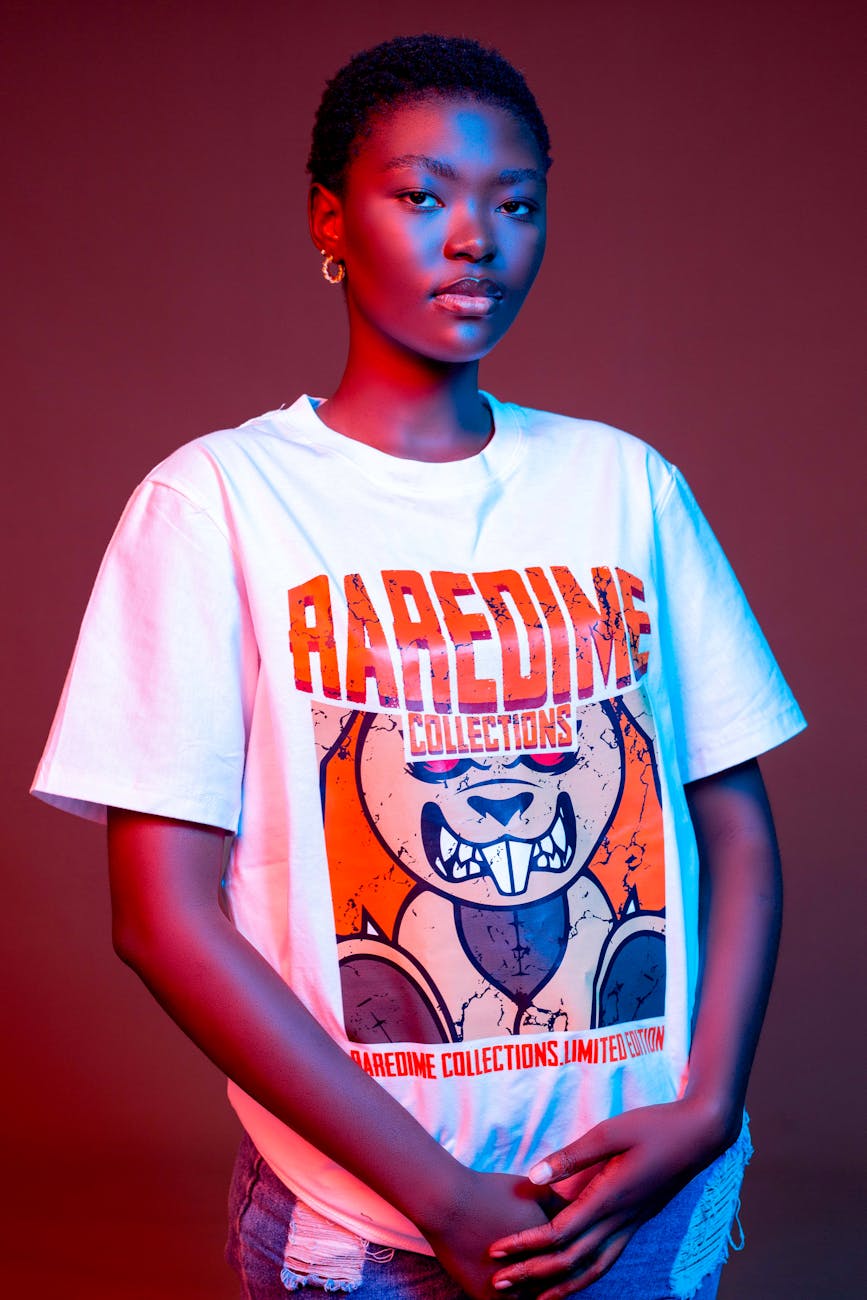
DTF (Direct to Film) printing is an innovative and versatile modern printing technology used in the garment decoration industry. Unlike traditional methods, which may have limitations based on fabric type or colour, DTF transfers allow for vibrant, durable prints on a wide range of materials. The process involves printing a design onto a special film, applying a powder adhesive, and then transferring the design onto the garment using heat.
How DTF Printing Works:
- Design Creation: The process begins with creating a digital design, which is then printed onto a PET film using special DTF inks.
- Adhesive Application: A heat-cured powder adhesive is applied to the printed film while the ink is still wet. This powder ensures that the design adheres firmly to the fabric during the transfer process. The cured transfers do not need to be used immediately, they can be stored for convenient future use when needed.
- Heat Transfer: The printed film with the adhesive is placed onto the garment, and heat is applied using a heat press. The combination of heat and pressure transfers the design from the film onto the fabric.
- Peel and Finish: After the transfer, the film is peeled away, leaving the vibrant design securely bonded to the garment.
DTF Printing Compared to Other Printing Technologies
DTF vs. Screen Printing
Screen Printing is one of the most traditional and widely used methods for garment decoration. It involves creating a stencil (or screen) for each colour in a design and applying ink through the screens onto the fabric.
- Setup and Cost: Screen printing requires significant setup time and costs, especially for multi-colour designs, as each colour needs a separate screen. In contrast, DTF printing has minimal setup requirements, making it more cost-effective, especially for small runs or intricate designs.
- Detail and Complexity: DTF printing excels in producing highly detailed and complex designs, including photorealistic images with no colour limitations. Screen printing, however, struggles with intricate details and is more suited to simpler designs with fewer colours.
- Versatility: DTF can print on a variety of fabrics, including cotton, polyester, nylon, and blends, without any special treatment. Screen printing is typically more limited, working best on flat, smooth fabrics and requiring special inks or treatments for different materials.
- Environmental Impact: Screen printing often involves substantial ink waste, water usage, and chemicals. DTF printing is more environmentally friendly, as it uses less ink, doesn’t require water, and eliminates the need for harsh chemicals.
DTF vs. DTG (Direct-to-Garment) Printing
Direct-to-Garment (DTG) Printing is another modern printing method that involves printing directly onto fabric using specialized inkjet technology.
- Fabric Compatibility: DTG is best suited for cotton and cotton-blend fabrics and may require pre-treatment for dark garments to ensure proper ink absorption. DTF printing, on the other hand, is compatible with a broader range of fabrics without requiring pre-treatment, making it more versatile.
- Colour Vibrancy: While DTG provides excellent colour vibrancy on light-coloured cotton fabrics, it can struggle with dark fabrics or non-cotton materials. DTF printing produces consistent, vibrant colours across all fabric types, including dark and synthetic materials.
- Durability: DTF prints are highly durable, resisting cracking, fading, and peeling even after multiple washes. DTG prints, while durable, may not offer the same level of wash resistance, especially on dark fabrics.
- Production Speed and Efficiency: DTF can be faster for large batches or complex designs, as it doesn’t require the pre-treatment that DTG needs. It also offers faster turnaround times for small orders compared to the time-intensive DTG process.
DTF vs. Heat Transfer Vinyl (HTV)
Heat Transfer Vinyl (HTV) involves cutting designs from coloured vinyl sheets and then applying them to garments using heat.
- Design Flexibility: HTV is limited to solid colours and requires layering for multi-colour designs, which can be time-consuming and less detailed. DTF allows for full-colour, complex designs with gradients and fine details, all printed in one pass.
- Material Compatibility: HTV works well on various fabrics but is often bulky and less breathable. DTF transfers are thin, flexible, and more comfortable to wear, with the ability to print on a wider variety of materials.
- Durability: Both HTV and DTF offer durable prints, but DTF tends to be more resistant to cracking and peeling over time, providing a longer-lasting finish.
Why DTF Stands Out
DTF printing is rapidly becoming a preferred choice in the garment decoration industry due to its versatility, cost-effectiveness, and high-quality results. It offers significant advantages over traditional methods like screen printing, DTG, and HTV by providing greater detail, colour vibrancy, and fabric compatibility, all while being more eco-friendly and efficient.
Whether you’re a small business looking for a flexible printing solution or an established company seeking to expand your product offerings, DTF transfers provides a powerful, sustainable alternative that meets the demands of today’s market.



 dtftransfersuk.com
Leave a comment